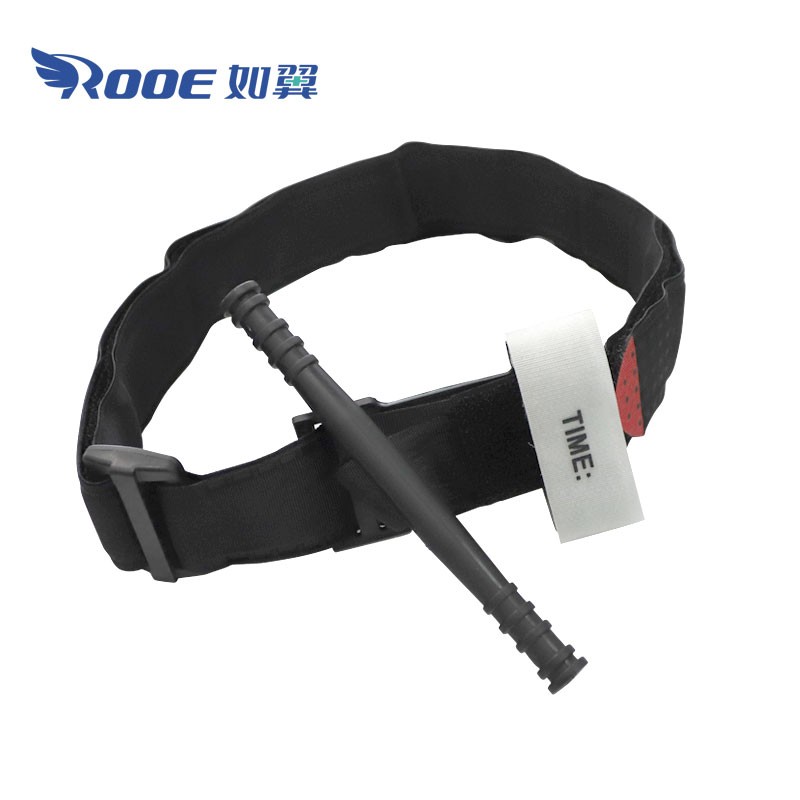

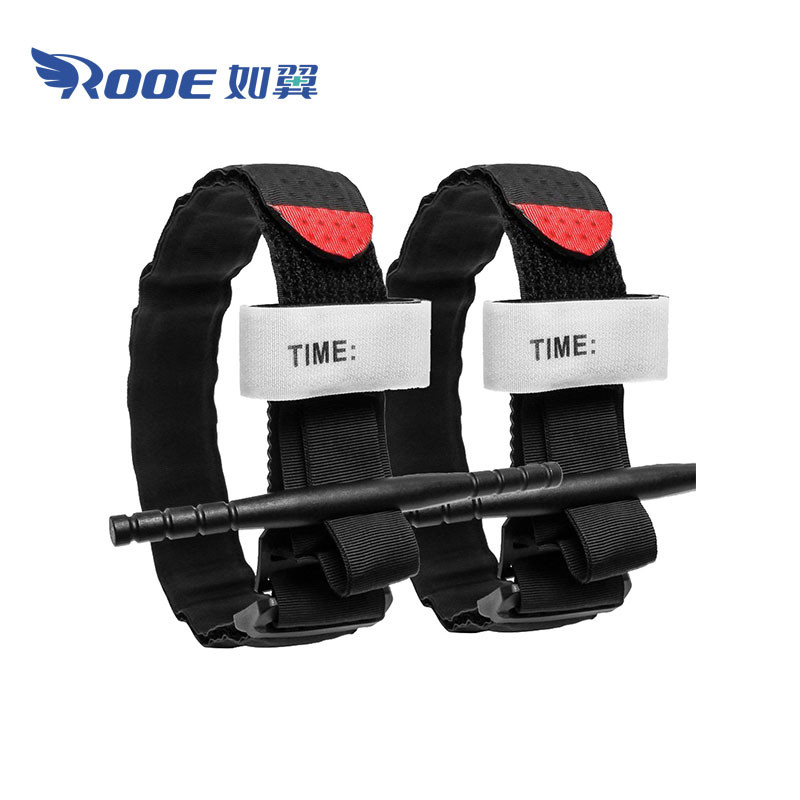
Nylon First Aid Tourniquet Buckle Strap Stop The Bleed Tourniquet Description:
Haemorrhage is the leading cause of preventable death in both tactical and non-tactical trauma Settings. The First Aid Tourniquet is 100% effective in stopping arterial blood flow quickly and is suitable for most people's hands and strong thighs. Tourniquet Buckle Strap's red tip technology comes with a red oval tip to help the user position and thread in the application. Different conditions require different medical care; So we made sure our Stop the Bleed Tourniquet was fully adjustable to help with any type of situation. Emergency Tourniquet has a wide range of uses: it can be used for military, medical aid, arterial bleeding, etc.
We recommend that people add one or more nylon Tourniquet to their home emergency kit, car, backpack, motorcycle, range bag, construction belt or carry it with them in case of emergency. It is the protector and defender of you and your family.
Nylon First Aid Tourniquet Buckle Strap Stop The Bleed Tourniquet Features:
1. Made of durable nylon and hard plastic to ensure quality and standard for medical use.
2. Easy to clean and reusable, tactical tourniquets can be carried anywhere and can be used indoors and outdoors or in wet weather.
3. High-quality stitching and Velcro provide durability and protect tourniquet integrity and strength during use.
4. Composite buckle for resistance to impact in cold weather.
5. One-handed rapid control of peripheral bleeding or arterial bleeding in pre-hospital emergencies, saving lives
6. The kit is small, easy to store and carry in any holster, case or auxiliary kit, and it won't cause any trouble with your home trauma kit, outdoor sports bag, car, backpack, excellent mobility.
7. Reusable, easy to clean

Apply the tourniquet
Wrap the tourniquet around the bleeding arm or leg about 2 to 3 inches above the bleeding site
Pull the free end of the tourniquet to make it as tight as possible and secure the free end. (A)
Twist or wind the windlass until bleeding stops. (B)
Secure the windlass to keep the tourniquet tight. (C)
Note the time the tourniquet was applied. (D)